30
Oct- Prago Technologies
- Home Security
A camera at the front gate is useful. You can check on visitors or review an incident. But it may not tell you much about someone opening a rear door while the family is asleep, particularly if that entrance isn't covered.
This is worth considering when planning a home security service system in Kerala, especially if work keeps you away or your family lives here while you are abroad. Before choosing cameras and alarms, think about which parts of the house need monitoring and where an immediate warning would be useful.
Begin With the Less Obvious Entrances
When planning home security, it's easy to concentrate on the main gate and front door while overlooking the other ways someone could enter. In a villa, that might be a rear kitchen door, an outside staircase or a ground-floor window that can be reached from the compound.
It's worth looking at these areas after dark, when poorly lit passages and hidden entrances become easier to identify.
A rear door that's rarely used may only need an opening sensor, while an entrance used throughout the day requires more thought about when its alarm should be active. The same security arrangement won't necessarily suit both.
For entrances used regularly by family members or household staff, biometric access control may be worth considering. Homeowners looking for a biometric access control system in Kozhikode, Kerala, can explore fingerprint-based entry as an alternative to conventional keys, depending on their property's requirements.
Don't Judge CCTV by the Number of Cameras
Camera height and viewing angle need some thought, particularly near the main gate. A camera placed too high may capture vehicles entering the compound but leave people's faces unclear. Footage can also lose detail at night when headlights or outdoor lights shine towards the lens.
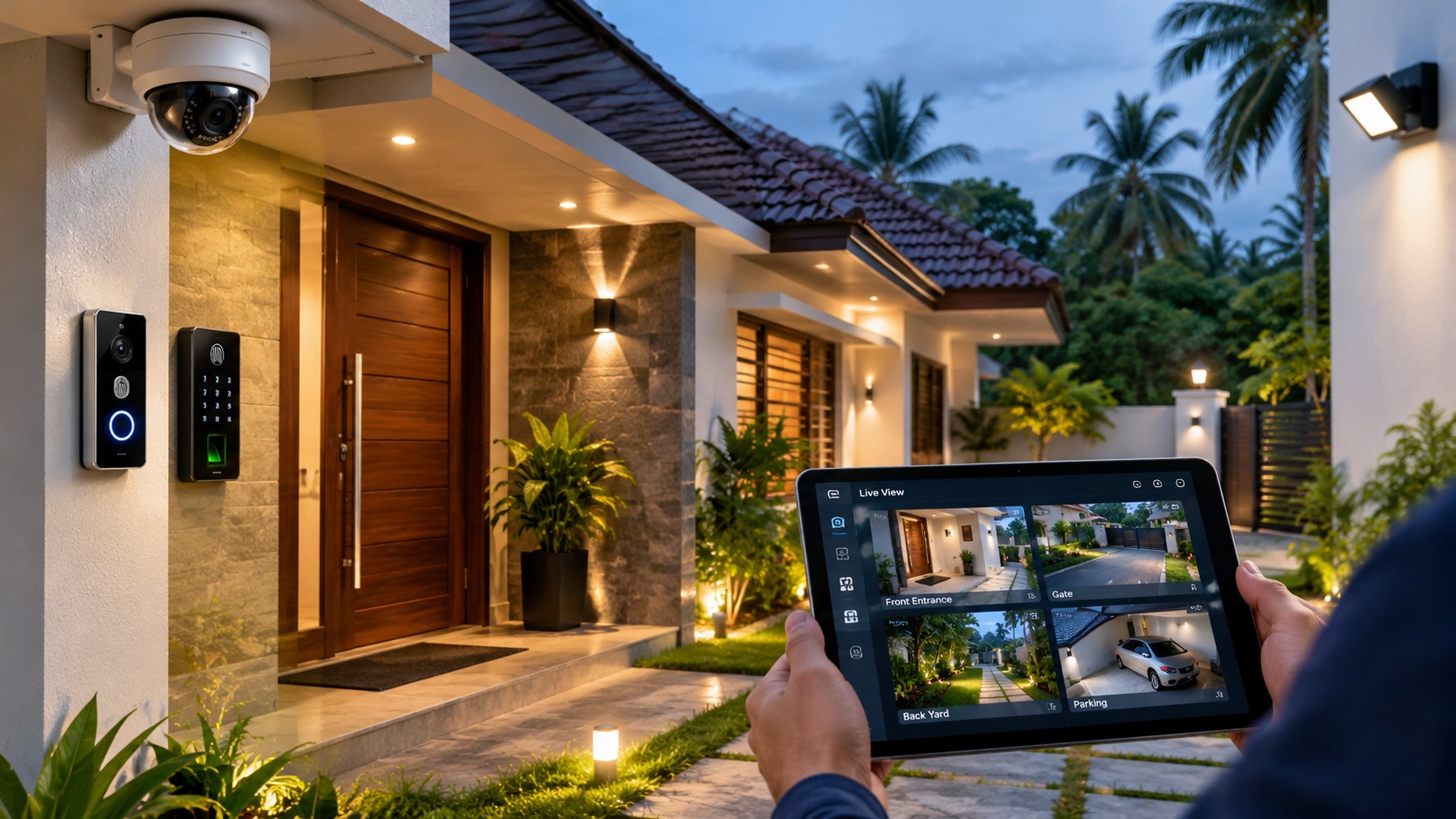
During CCTV installation in Calicut, it's worth reviewing the footage from the proposed positions before the cameras are permanently mounted. The picture may look fine during the day but become less useful at night, particularly around porch lights and vehicle headlights. The viewing angle should also avoid neighbouring private areas.
Recording storage is another decision to make early. The number of cameras, storage capacity and recording settings determine how much footage can be retained, so it's worth discussing how many days of recordings you actually need.
Protect Entrances That Cameras Cannot Monitor Continuously
Rear doors and accessible windows are worth looking at separately when planning home security. Even with CCTV coverage, someone would have to notice the activity or receive a camera alert.
A magnetic contact on a door or window can trigger an alarm when that entrance is opened while the system is armed. Motion sensors can cover hallways or other indoor areas, although their positions need to account for everyday movement and pets.
At night, for instance, the family could leave the rear entrance protected without activating every motion sensor inside the house. The installer should work out which sensors stay armed and which can be switched off, based on how people normally use the space.
Plan What Happens After an Alarm Is Triggered
For NRIs with family homes in Kerala, remote security alerts can be useful. But there may be times when you're unable to check your phone, particularly if you're living in a different time zone.
Having another trusted family member receive important notifications can help. They can check the camera footage or contact someone at home if an alarm goes off. It's also worth discussing what the family should do if an alert suggests a break-in, rather than trying to investigate it themselves.
Some home automation and security solutions in Kerala allow intrusion sensors to work alongside CCTV cameras and outdoor lighting. When a sensor is triggered, the system may provide access to the relevant camera feed or switch on the lights near that entrance. Whether these features are available depends on the equipment and how it is configured.
Check Power Backup and Network Reliability
Power backup is something worth discussing when installing CCTV and intrusion alarms. Having a battery backup for the alarm doesn't mean the cameras and Wi-Fi router will keep working during a power cut. The recording equipment needs power too, and while footage can still be stored locally without the internet, checking the cameras remotely or receiving alerts will usually require a working connection.
Before installation, find out which devices will remain active during an outage and how long the backup can support them.
Regular maintenance matters too. Backup batteries need periodic checks, and cameras and other connected devices should receive security updates when available. It is also worth confirming who will handle these after installation.
Test the System Before Handover
Before the installation is complete, it's worth seeing how the security system works in everyday situations. You should be able to check what happens when an armed door is opened, whether motion sensors trigger the right alerts and how easily the recorded footage can be accessed.
Night mode also needs testing while family members move around the house. Everyone using the system should be familiar with the basic controls and know how to handle a false alarm.
Prago Technologies helps homeowners plan and install security systems based on their property's layout and requirements, with testing carried out before handover.
For a security alarm system service in Calicut, explore Prago's security solutions and discuss the right setup for your home.A camera at the front gate is useful. You can check on visitors or review an incident. But it may not tell you much about someone opening a rear door while the family is asleep, particularly if that entrance isn't covered.
This is worth considering when planning a home security service system in Kerala, especially if work keeps you away or your family lives here while you are abroad. Before choosing cameras and alarms, think about which parts of the house need monitoring and where an immediate warning would be useful.
Begin With the Less Obvious Entrances
When planning home security, it's easy to concentrate on the main gate and front door while overlooking the other ways someone could enter. In a villa, that might be a rear kitchen door, an outside staircase or a ground-floor window that can be reached from the compound.
It's worth looking at these areas after dark, when poorly lit passages and hidden entrances become easier to identify.
A rear door that's rarely used may only need an opening sensor, while an entrance used throughout the day requires more thought about when its alarm should be active. The same security arrangement won't necessarily suit both.
For entrances used regularly by family members or household staff, biometric access control may be worth considering. Homeowners looking for a biometric access control system in Kozhikode, Kerala, can explore fingerprint-based entry as an alternative to conventional keys, depending on their property's requirements.
Don't Judge CCTV by the Number of Cameras
Camera height and viewing angle need some thought, particularly near the main gate. A camera placed too high may capture vehicles entering the compound but leave people's faces unclear. Footage can also lose detail at night when headlights or outdoor lights shine towards the lens.
During CCTV installation in Calicut, it's worth reviewing the footage from the proposed positions before the cameras are permanently mounted. The picture may look fine during the day but become less useful at night, particularly around porch lights and vehicle headlights. The viewing angle should also avoid neighbouring private areas.
Recording storage is another decision to make early. The number of cameras, storage capacity and recording settings determine how much footage can be retained, so it's worth discussing how many days of recordings you actually need.
Protect Entrances That Cameras Cannot Monitor Continuously
Rear doors and accessible windows are worth looking at separately when planning home security. Even with CCTV coverage, someone would have to notice the activity or receive a camera alert.
A magnetic contact on a door or window can trigger an alarm when that entrance is opened while the system is armed. Motion sensors can cover hallways or other indoor areas, although their positions need to account for everyday movement and pets.
At night, for instance, the family could leave the rear entrance protected without activating every motion sensor inside the house. The installer should work out which sensors stay armed and which can be switched off, based on how people normally use the space.
Plan What Happens After an Alarm Is Triggered
For NRIs with family homes in Kerala, remote security alerts can be useful. But there may be times when you're unable to check your phone, particularly if you're living in a different time zone.
Having another trusted family member receive important notifications can help. They can check the camera footage or contact someone at home if an alarm goes off. It's also worth discussing what the family should do if an alert suggests a break-in, rather than trying to investigate it themselves.
Some home automation and security solutions in Kerala allow intrusion sensors to work alongside CCTV cameras and outdoor lighting. When a sensor is triggered, the system may provide access to the relevant camera feed or switch on the lights near that entrance. Whether these features are available depends on the equipment and how it is configured.
Check Power Backup and Network Reliability
Power backup is something worth discussing when installing CCTV and intrusion alarms. Having a battery backup for the alarm doesn't mean the cameras and Wi-Fi router will keep working during a power cut. The recording equipment needs power too, and while footage can still be stored locally without the internet, checking the cameras remotely or receiving alerts will usually require a working connection.
Before installation, find out which devices will remain active during an outage and how long the backup can support them.
Regular maintenance matters too. Backup batteries need periodic checks, and cameras and other connected devices should receive security updates when available. It is also worth confirming who will handle these after installation.
Test the System Before Handover
Before the installation is complete, it's worth seeing how the security system works in everyday situations. You should be able to check what happens when an armed door is opened, whether motion sensors trigger the right alerts and how easily the recorded footage can be accessed.
Night mode also needs testing while family members move around the house. Everyone using the system should be familiar with the basic controls and know how to handle a false alarm.
Prago Technologies helps homeowners plan and install security systems based on their property's layout and requirements, with testing carried out before handover.
For a security alarm system service in Calicut, explore Prago's security solutions and discuss the right setup for your home.